
Your Amazon Account Gets Suspended. Here's What to Do.
When Amazon suspends your account, the dramatic language in their email can mask what's actually happening. This guide breaks down the exact steps to take, how to write an effective Plan of Action, and when to escalate beyond the standard appeals process.

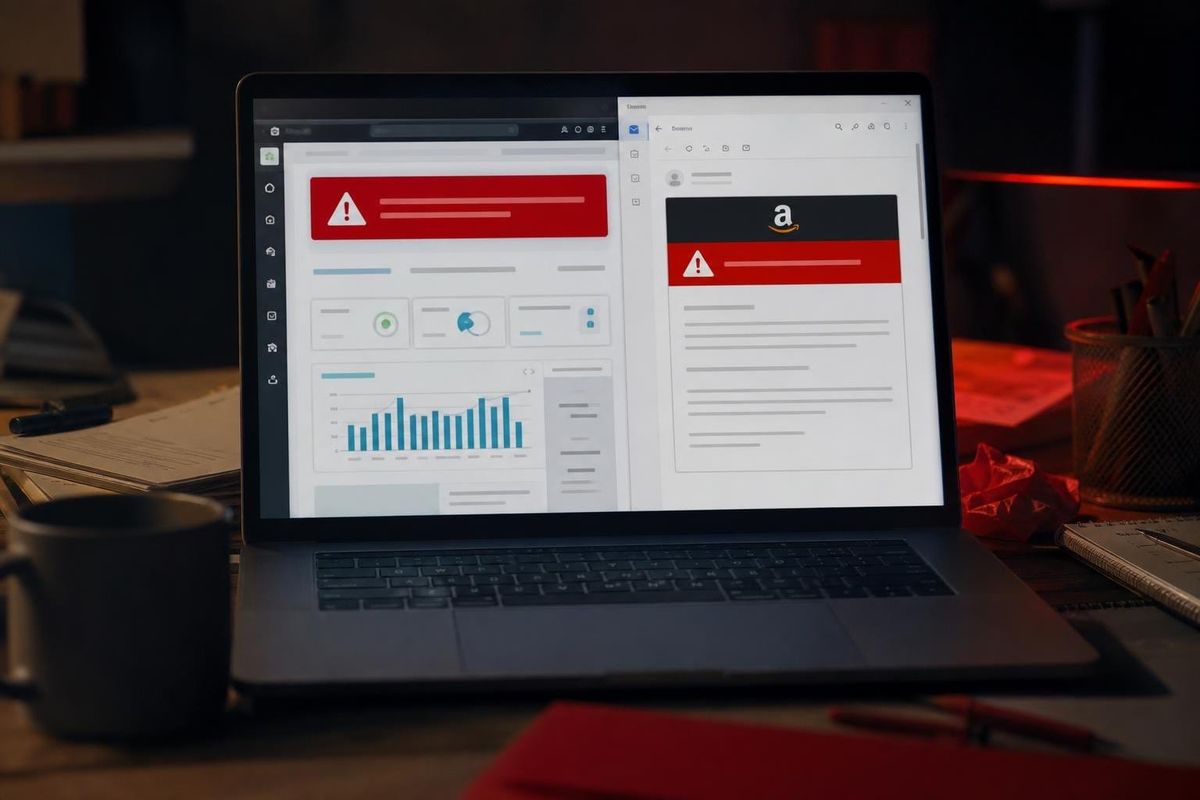
The email arrives and Amazon's language, as always, veers straight towards the dramatic. Words like suspended, deactivated, violations. Even for something relatively minor, the tone of these template emails makes it feel like your business is about to be switched off. That is not an accident. It is just how Amazon communicates, and understanding that early stops you from reacting to the language rather than the actual problem underneath it.
Here is the other thing you need to accept before you do anything else. Amazon's position is always that the onus is on you, the seller, to admit fault and to comply with their decision, regardless of whether you actually did anything wrong, regardless of whether the issue is ambiguous, and regardless of whether Amazon's own systems or a third-party complaint triggered the whole thing in the first place. There is no tribunal. There is no neutral arbitration. If a retail brand had an issue with Tesco, there is a legal process, a fair hearing, somewhere to take it. With Amazon, there is no equivalent. It is their rules or nothing at all.
I learned early that fighting them gets you nowhere. If you try to argue the toss through first-line, second-line or third-line seller support, you are wasting time you do not have. The only productive thing to do is work the process.
Step one: read the notice carefully and work out what is actually happening
Amazon's suspension emails are generated by automated systems. Bots pick up on data signals, flags get triggered, and the email comes out the other end. Which means the email you receive is not always a clean description of the underlying problem. Sometimes it is pointing at a symptom, not the cause.
Read the whole notice twice. Work out which category of issue it relates to: policy violation, product safety, account health metrics, or a third-party complaint such as a rights owner claim or a brand abuse report. Write down any specific ASINs mentioned and note the exact wording used.
The category matters because the response is completely different for each one. Sending a Plan of Action written for a policy violation when Amazon has actually flagged a product safety issue tells them you do not understand what you have been suspended for. That makes things worse, not better.
Step two: build your Plan of Action, and use AI to help you write it
The Plan of Action, the POA, is the formal written response Amazon expects when you appeal. Most sellers approach this badly. Either they write it in a fury ("I have done nothing wrong and this is unfair") or they over-explain and introduce new problems Amazon had not noticed. Both get rejected.
A POA has three parts:
- What the root cause was
- What you have already done to fix it
- What you are putting in place to prevent it happening again
This is where AI is genuinely useful. Feed it everything: the exact wording of the suspension email, screenshots of any relevant account data, a clear description of what you think triggered it. A well-prompted AI can help you structure the response, keep the language factual and calm, and avoid the kind of emotional pleading that Amazon's appeals team ignores on sight. The output still needs your input and your accuracy, but AI handles the drafting well once you give it the right material.
What Amazon does not want to read: how long you have been selling, how many good reviews you have, or how much your business depends on this. Keep it factual, keep it plain, keep it short.
The hardest part is the root cause, because it requires you to acknowledge something rather than argue against the allegation. Even if you believe the complaint was fraudulent or the flag was triggered by a competitor, you do not write that in the root cause section. You describe what was alleged, explain what you investigated, and set out what you changed. It sounds counterintuitive. It is also far more effective than a denial.
Step three: check whether a POA is actually necessary
Not every suspension email requires a full Plan of Action. Sometimes there is a cleaner route.
If you are on Seller Fulfilled Prime and a metric like your late dispatch rate has been flagged, the trigger may sit with a courier rather than with you. Amazon's policy for partnered carriers is that they bear responsibility for their own failures. If you can obtain a letter from the courier confirming that the issue was on their end, Amazon will often drop the case without requiring a POA at all. It is worth checking the specific policy for your situation before you spend hours drafting a response to a problem that someone else is contractually responsible for.
Step four: deal with the real world while the appeal runs
While the appeal is in progress, things outside Amazon do not pause. Wholesale customers, DTC orders, stock sitting in an FBA warehouse you cannot touch. Contact anyone directly affected early. A platform-level fulfilment complication is accurate and does not cause unnecessary alarm. You do not need to spell out that it is a Seller Central issue.
If you have stock outside FBA or a functioning DTC channel, assess your options quickly. A suspension pauses your Amazon listings. It does not pause your business unless you let it.
Keep a clear record of everything you send to Amazon and every response you receive, with timestamps. If the appeal drags on, that record becomes important.
Step five: if the first appeal fails, and if it is serious
A rejected appeal is not the end. Resubmit with a cleaner, shorter, more specific POA. Read the rejection carefully: Amazon will usually tell you, in fairly blunt terms, what was missing or unconvincing. Take that at face value and rewrite accordingly.
For more complex or high-stakes cases, there is a route beyond the standard appeals process that most sellers do not consider: getting a legal firm that specialises in Amazon suspensions and compliance involved. Some of these firms have back-channel contacts within Amazon. They understand how to word things in a way that gets past automated screening and triggers escalation to the right internal teams. They work on enough cases that they know what actually moves things.
They are not cheap. But if your Amazon revenue is significant and the standard process is going nowhere, the cost of getting the right firm involved is usually far less than the cost of staying suspended. The executive seller relations route, the so-called Bezos email approach, still exists and can work for serious cases. And Brand Registry has its own escalation paths if your issue involves intellectual property or brand abuse.
Avoid anyone who promises a guaranteed result for a fee with no clear explanation of what they actually do. There are plenty of those, and most are not worth it.
What this actually teaches you
When it resolves, the temptation is to breathe out and get back to business. I think that is the wrong move.
Every suspension is an audit of how you operate. Whether it was a dodgy complaint, a policy you had not read closely enough, or a metric that crept the wrong way while you were busy, something allowed it to happen. An account that has been suspended once and comes out with proper account health monitoring in place is in better shape than one that has never been suspended and never thought about it.
Know your metrics before Amazon flags them. Keep your product documentation clean, especially anything touching safety and compliance, because the regulatory picture for imported goods is getting more complicated. And if you are over-reliant on Amazon as your only channel, a suspension makes that painfully clear.
The account you build after a suspension is usually the stronger one. Not because the experience was fun, but because you finally took the plumbing seriously.
So now you have a plan. The only question is whether you wait until you need it.