
Why Everyone on Amazon UK Is Now Competing With Factories Directly
Two-thirds of Amazon UK storefronts are now run by Chinese factories selling directly to consumers. AI is closing the language gap that once favored UK sellers, making price competition futile. Success requires building brand and exceptional customer service instead.

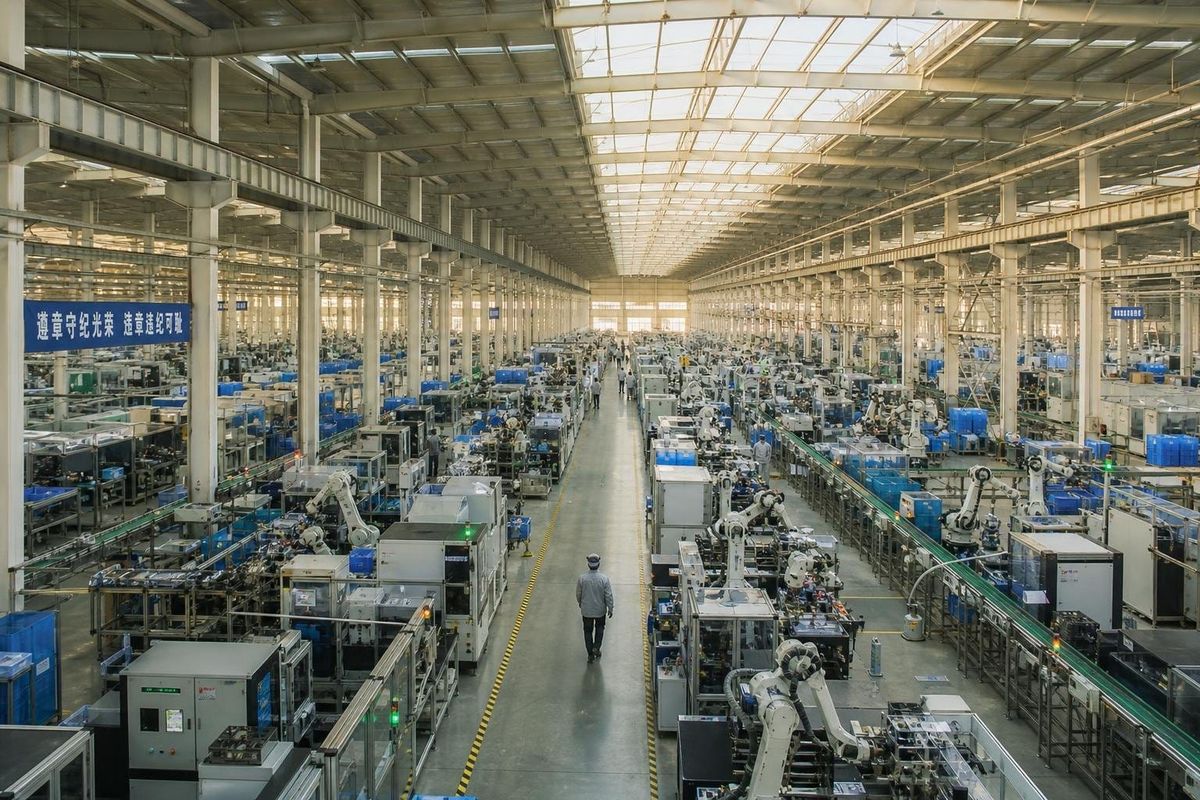
Two thirds of the storefronts on Amazon UK are registered in mainland China. Not two thirds of the dodgy listings, not two thirds of the cheap categories. Two thirds of the active seller accounts, right now, across the whole marketplace.
I'll be honest: even knowing this, the number still lands harder every time I look at it.
Some of those are brands doing proper marketing, building a presence, playing the long game. But a meaningful chunk of them are factories. Manufacturers who have cut out the middleman entirely and are selling direct to British consumers, from the same production line that used to supply the brands that used to supply you. They don't need a margin to cover sourcing trips, or a team to manage supplier relationships, or a buffer for the unpredictable cost of getting a container from Guangdong to Felixstowe. They own the machine. You're competing with the machine.
And it's getting harder to spot them.
AI has quietly closed one of the gaps that used to give UK sellers a natural advantage. Translation used to be a tell. Listings that read oddly, customer messages that felt off, storefronts that didn't quite land the way a native speaker would pitch things. That friction is mostly gone now. AI tools are helping Chinese factory sellers write fluent listing copy, handle customer messages in natural English, and pick up on the cultural quirks that each marketplace has. The localisation that used to take years of market knowledge, or a UK-based team, can now be approximated at low cost. That matters, because it means the gap between a factory listing and a brand listing is narrower than it was, at least on the surface.
And I'd argue most UK sellers still haven't fully absorbed what that means.
The easiest lever is the wrong one
When new competition shows up on Amazon, the instinct is to drop the price. It's fast, it's visible, it shows up in the buy box within the hour. I get it. I've done it. When you're watching your conversion rate slide and a new listing has appeared overnight at £3 less than yours, reaching for the price field feels like doing something.
The problem is, doing something and doing the right thing are different. Against a factory selling direct, a price war isn't a tactic. It's a slow exit strategy. They can hold a price you cannot. Their cost base is a fraction of yours. You will grind your margin down, compress your contribution, and eventually decide the product isn't worth running, which is probably what they were waiting for.
I've spent nine years selling on Amazon with my own money at risk, and the one lesson that has paid for itself over and over is this: compete on what they cannot copy.
A factory can source cheaper than you. A factory can now, with the right AI tools, write decent English copy and reply to messages in a tone that sounds plausible. But there are things they genuinely cannot do, and those are the things worth building on.
Build the brand. That's it.
Brand is the most obvious one, and also the one most sellers treat as decoration rather than strategy. A brand that someone recognises, trusts, or wants to give as a gift takes years of consistent positioning to build. A manufacturer pivoting between private label jobs and their own listings doesn't have the patience for that, and honestly, doesn't have the interest in it. Brand is not a logo. It's the accumulated weight of every interaction someone has had with your product, your packaging, your content, and your story.
Your story, specifically. This is somewhere a factory-direct seller genuinely cannot follow you. Why you started the business, what problem you were trying to solve, why you care about getting this product right. I can talk about Martian Made and mean it, because I built it. I can show up in a video or write a post and explain what drove me to spend years developing a sleep brand from scratch. Someone operating a storefront out of a factory floor cannot do that with any credibility. They can write product copy. They cannot write a founder's story, because there isn't one.
That visibility, whether it's posts, video, or just being findable as a real person behind a real brand, is a moat that AI cannot replicate yet. It requires you to actually exist as the face of the thing.
The honest version of what brand building actually costs
I'm not going to pretend brand building is a quick fix, because it isn't. It's slower than lowering your price. It costs more upfront. The returns are harder to attribute in a spreadsheet than a straightforward A/B price test. And for sellers who have grown used to treating Amazon as a search engine to optimise rather than a shop to run, it requires a genuinely different way of thinking about what they're doing.
The work involves the things that feel soft but aren't: writing listing content that a real person would find convincing, not just keyword-stuffed enough to rank (and increasingly, with Amazon's AI shopping layer reading your Q&A sections and making recommendations based on them, that distinction matters more than it did). It's building an email list through your DTC channel so a suspension or an algorithm change doesn't erase your relationship with customers overnight. It's having a product that does something specific for someone specific, priced at a point where your unit economics actually work, and packaging it in a way that signals quality before anyone opens the box.
The one area most sellers underestimate
Customer service. I mean genuinely good, localised, human customer service.
Most product categories involve at least some post-purchase contact. Questions, problems, returns, requests for a spare part or a missing instruction booklet. It might be occasional, it might be frequent, but it's there. And this is an area where being a UK seller, with a real understanding of how British customers communicate and what they expect, is a structural advantage.
A seller based in China, however fluent their AI-assisted English, cannot replicate the instinct of a native speaker fielding a frustrated message. They won't catch the tone of a politely worded complaint that's actually quite serious. They won't know that a customer asking for "a quick swap" probably just wants the problem resolved and isn't looking for an argument about policy. And if the resolution involves sending something physical, a replacement part, a new component, a document, you can do that from the UK in a couple of days. They cannot.
Customers are expecting more from post-purchase service, not less. The brands that treat customer service as a cost centre and the brands that treat it as a way to build loyalty are getting very different results. This is somewhere the factory-direct model is structurally weak, and where a UK brand, if it's paying attention, can consistently win.
None of this is revolutionary advice. The frustrating thing, I think, is that most sellers already know it, and still don't do it, because the price lever is right there, and brand building requires you to tolerate a period where you're investing without seeing the return yet.
That period is uncomfortable. It's also the bit where most of your factory-direct competitors won't follow you, because their whole model depends on volume and speed, not patience.
There's a gardening analogy lurking here that I'll spare you, but the root system matters more than the visible growth. If your whole competitive position is priced a few pence below whoever appeared last week, you don't have a root system. You have a listing.
What twelve months of price competition actually buys you
The question I'd leave you with isn't rhetorical. If your primary response to Chinese factory sellers is to keep shaving the number, what does your business look like this time next year? Not in terms of revenue, but in terms of whether you'd want to keep running it. At what margin does it stop being worth it?
That's the real competition. Not Amazon's fee changes, not the fuel surcharges, not whatever the algorithm does next quarter. The real question is whether you're building something that has a reason to exist beyond being fractionally cheaper than the next person.
So. Are you?