
Inspiring Spaces: Where Contemplation Meets Commerce
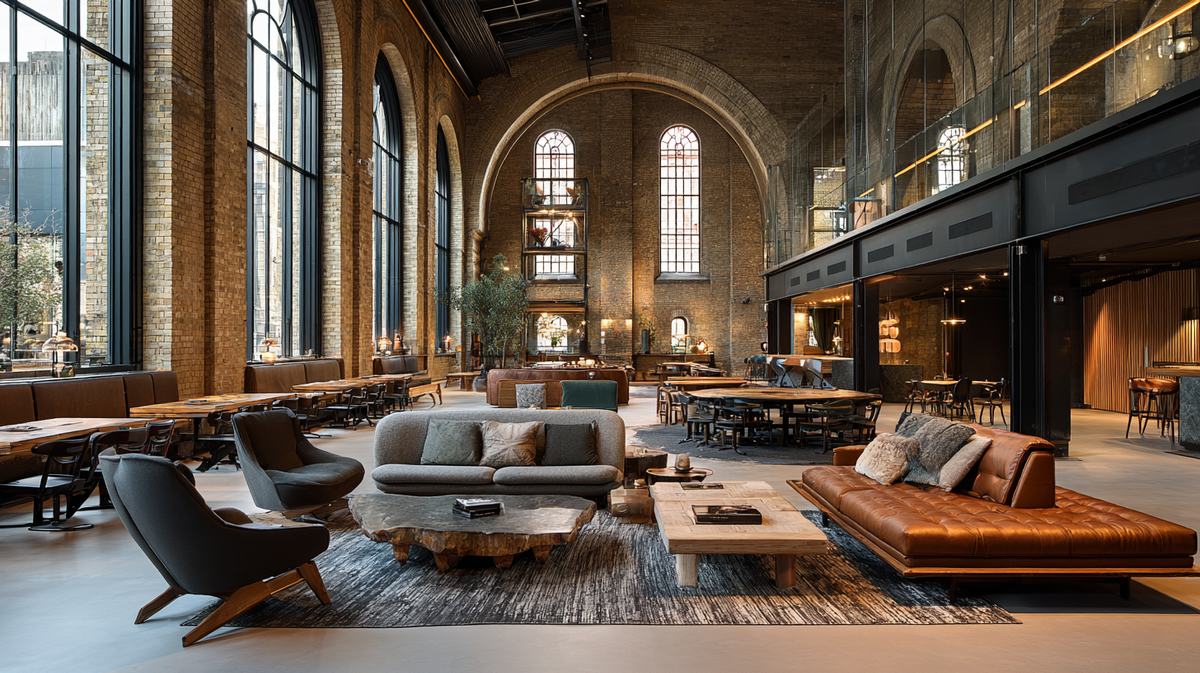
There was a time when doing business meant one thing and one thing only. An office. A desk. A chair that slowly destroyed your posture. Fluorescent lights that hummed quietly while draining the last remaining creativity from your brain.
That era is ending. Not with a bang, but with a laptop quietly opening on a café table.
A flexible business demands a flexible mind. And a flexible mind demands the right environment. Meetings still matter. Face to face conversations still matter. Human connection still matters. But the assumption that all of this must happen inside four identical walls is one of the great hangovers of old thinking.
Entrepreneurs are creatures of habit. We talk about innovation, yet many of us default to the same members clubs, the same private offices, the same predictable meeting rooms. Plush furniture. Polite silence. Zero inspiration. They look impressive on Instagram, but they do very little for the quality of thinking that actually builds a business.
The irony is that the world is overflowing with inspiring spaces, yet we keep choosing the dull ones.
As I write this, I am sitting outside the Southbank Centre. I am between meetings. I have time to think. Proper thinking, not the frantic kind squeezed between emails. Around me there is movement, art, noise, laughter, and life happening in real time.
This matters more than people realise.
Inside the Southbank Centre itself there are countless places to sit, work, and reflect. Free wifi. Open spaces. Corners designed for lingering rather than rushing. I can watch the world pass by while organising my thoughts for the next conversation that actually matters. It is both grounding and energising at the same time, which is a rare combination.
This is what inspiring space really means. It is not about aesthetics alone. It is about how a place makes you think.
When you sit somewhere alive, your thinking becomes alive. When you sit somewhere sterile, your thinking often follows suit.
Business at its core is not about spreadsheets or strategies. It is about decisions. And the quality of your decisions is directly linked to the quality of your thinking. The environment you choose either supports that process or quietly sabotages it.
Most people underestimate this.
We tend to treat location as a logistical choice rather than a strategic one. Where is convenient. Where is expected. Where looks professional. Rarely do we ask a far more important question. Where do I think best.
For me, thinking best rarely happens under strip lighting.
The future of work is not static. It is fluid. It is mobile. It moves in chapters rather than routines. Project to project. Meeting to meeting. Pause to reflect. Move again.
Technology has made this not only possible, but inevitable.
Tablets, smartphones, cloud systems, and collaboration tools mean that the traditional office is no longer the command centre of your life. It is simply one option among many. Your calendar, reminders, notes, conversations, and ideas now live with you, not in a building.
We are becoming organisers of our own lives in a very literal sense.
This raises an interesting question about the role of the office and even the role of the personal assistant. As digital tools become better at anticipating our needs, managing our time, and nudging us gently in the right direction, many of the old support structures will quietly fade away.
Not because people are no longer valuable, but because the nature of value itself is changing.
The real value now lies in judgment, creativity, empathy, and clarity. None of which thrive particularly well in uninspiring environments.
When you work from inspiring spaces, something subtle but important happens. You reconnect with perspective.
You remember that business exists within life, not the other way around.
Sitting near artists, tourists, families, and passers by has a strange levelling effect. It reminds you that behind every email address is a human being with a story. It softens the edges of transactional thinking and replaces it with something more considered.
This is not softness for the sake of it. It is strength through awareness.
Some of the best conversations I have had were not planned. They happened because I chose to sit somewhere open rather than closed. Somewhere human rather than exclusive. Somewhere real rather than polished.
Inspiring spaces create accidental value.
They allow ideas to collide. They allow conversations to wander. They allow silence when silence is needed. This is contemplation in the truest sense. Thinking without force. Letting ideas surface rather than dragging them out.
Contrast that with the pressure of a booked meeting room. The clock ticking. The unspoken rush. The need to perform rather than reflect.
There is a time for structure. There is also a time for space.
The modern entrepreneur needs both, and must learn to choose consciously.
We often talk about freedom in business, but freedom is rarely exercised if it is not deliberately designed. Working from inspiring spaces is one of the simplest ways to reclaim that freedom without sacrificing productivity.
In fact, productivity often improves.
When you choose environments that support your mental state, work becomes less about endurance and more about flow. You do not need to force focus. It arrives naturally.
There is also a quiet confidence that comes from this way of working. You stop needing external validation from offices, titles, or memberships. Your sense of professionalism becomes internal rather than performative.
You know what you are doing. You know why you are doing it. And you choose spaces that reflect that clarity.
This shift also changes how meetings feel. Sitting across from someone in a relaxed, inspiring environment lowers defences. Conversations become more honest. Less rehearsed. More human.
I have seen deals progress faster over coffee by the river than they ever did across polished boardroom tables. Not because of tactics, but because trust forms more easily when people feel at ease.
This is something no sales training manual will ever fully explain.
We are moving towards a world where work fits around life, rather than life being something squeezed into evenings and weekends. Inspiring spaces play a crucial role in this transition.
They allow us to integrate work into the rhythm of living, rather than isolating it as something separate and heavy.
Of course, this requires responsibility. Freedom without discipline quickly becomes chaos. But for those who can manage their own energy, time, and focus, this way of working is not indulgent. It is intelligent.
It is also deeply sustainable.
When your working life includes movement, variety, and inspiration, burnout becomes far less likely. You are no longer fighting against your own nature. You are working with it.
So the question is not whether this future is coming. It is already here.
The real question is whether you will design it intentionally or drift into it by accident.
Next time you schedule a meeting, ask yourself if it truly needs four walls. Next time you need to think, ask yourself if your environment is helping or hindering that process.
Go and sit somewhere that makes you feel alert. Somewhere that makes you curious. Somewhere that reminds you why you started in the first place.
Because business is not built in spreadsheets alone. It is built in moments of clarity. And clarity rarely arrives when you are stuck in the same place, doing the same thing, surrounded by the same dullness.
The world is full of inspiring spaces.
The only real mistake is not using them.